Biblical Heritage
Feasts & Traditions
The seven Levitical feasts are not merely ancient ceremonies — they are God's prophetic calendar, each one a precise portrait of redemption fulfilled or yet to come in Jesus the Messiah.
"These are a shadow of things to come; but the body is of Christ." — Colossians 2:17
Spring Feasts — Nisan to Sivan
Fulfilled in Christ's First Coming
Historical Meaning
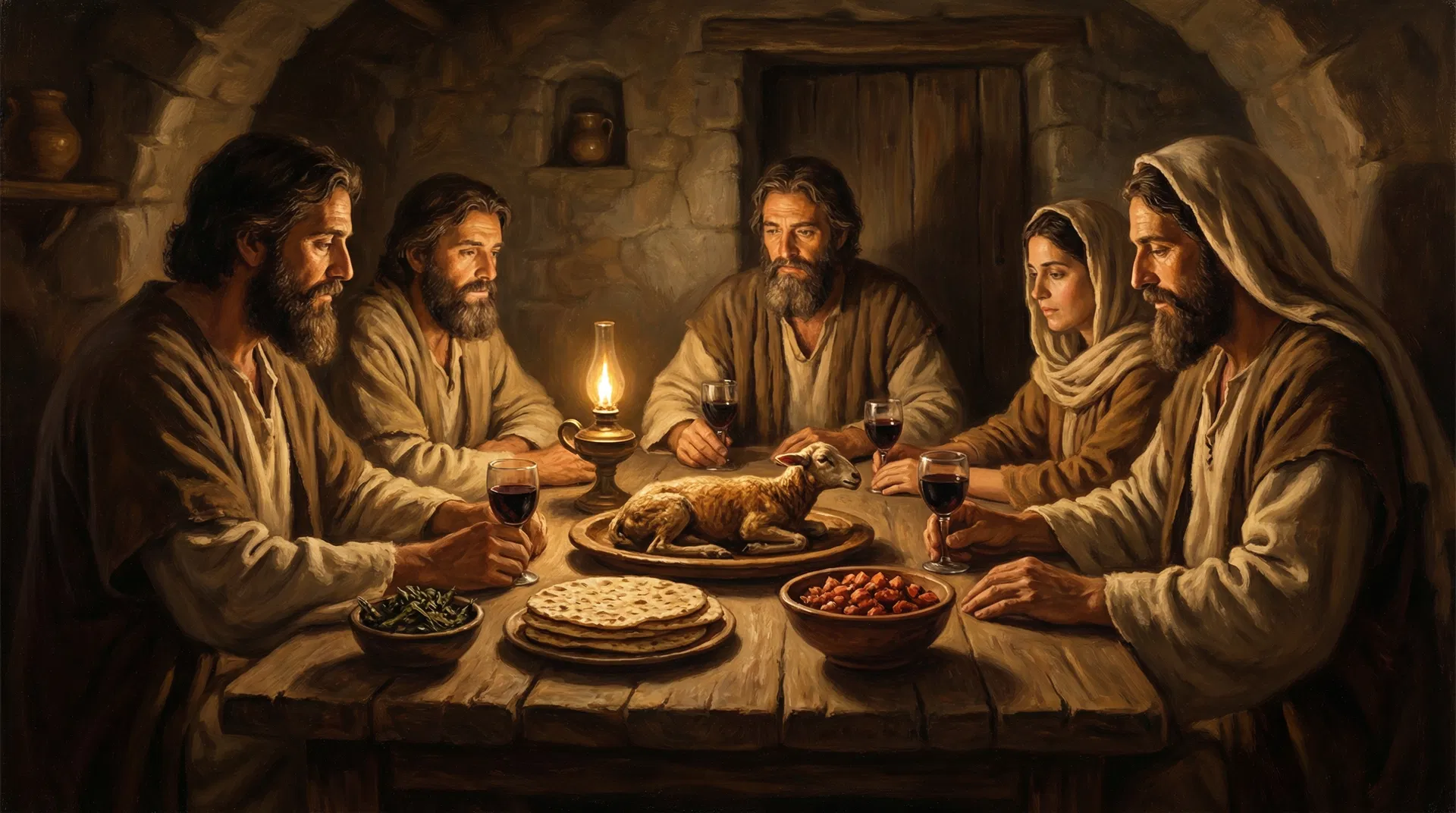
The foundational feast of Israel, commemorating the night God delivered His people from Egyptian bondage. The blood of a spotless lamb was applied to the doorposts so the angel of death would 'pass over' each household. It marked the birth of Israel as a nation and established the pattern of redemption through substitutionary sacrifice.
Observance
A lamb without blemish was slaughtered at twilight on 14 Nisan. Its blood was sprinkled on the doorposts. The Passover Seder meal — with bitter herbs (maror), unleavened bread (matzah), and lamb — was eaten in haste, with sandals on and staff in hand, ready to depart.
Christological Fulfillment
Jesus was crucified on the very day of Passover, at the same hour the lambs were being slaughtered in the Temple. Paul declares plainly: 'Christ our Passover is sacrificed for us' (1 Cor 5:7). He is the Lamb 'without blemish or defect' (1 Pet 1:19) whose blood, applied by faith, causes divine judgment to pass over the believer.
"Christ our passover is sacrificed for us."
— 1 Corinthians 5:7
Fall Feasts — Tishri
Prophetically pointing to Christ's Second Coming